
7 min read · Last updated September 10, 2026
- Households on SNAP (the Supplemental Nutrition Assistance Program) must report food destroyed in a “household misfortune,” like a power outage, fire, or flood, within 10 days of the loss for the report to count as timely, per Title 7 of the Code of Federal Regulations (CFR) § 274.6(a)(3)(i).
- Replacement is capped at one month’s maximum SNAP allotment for your household size, per § 274.6(a)(3)(iii), not the actual dollar value of what spoiled.
- After a federally declared disaster, states can get approval from the U.S. Department of Agriculture (USDA) to extend that reporting window. Texas extended Bexar County’s window from 10 days to 20 days, through September 17, 2026, after September storms and outages.
- You can’t collect both a disaster SNAP allotment and a regular misfortune replacement for the same loss event, per § 274.6(a)(2).
Households on SNAP whose food was destroyed by a power outage, fire, or flood can get it replaced, but the standard federal window to report it is only 10 days from the date of the loss, and the replacement itself is capped at one month’s maximum benefit for the household’s size.
In this article
- The 10-day rule most families never hear about
- What counts, and what you have to submit
- The cap: what one month’s allotment is actually worth
- When a whole region gets more time
- What families get wrong
- Frequently asked questions
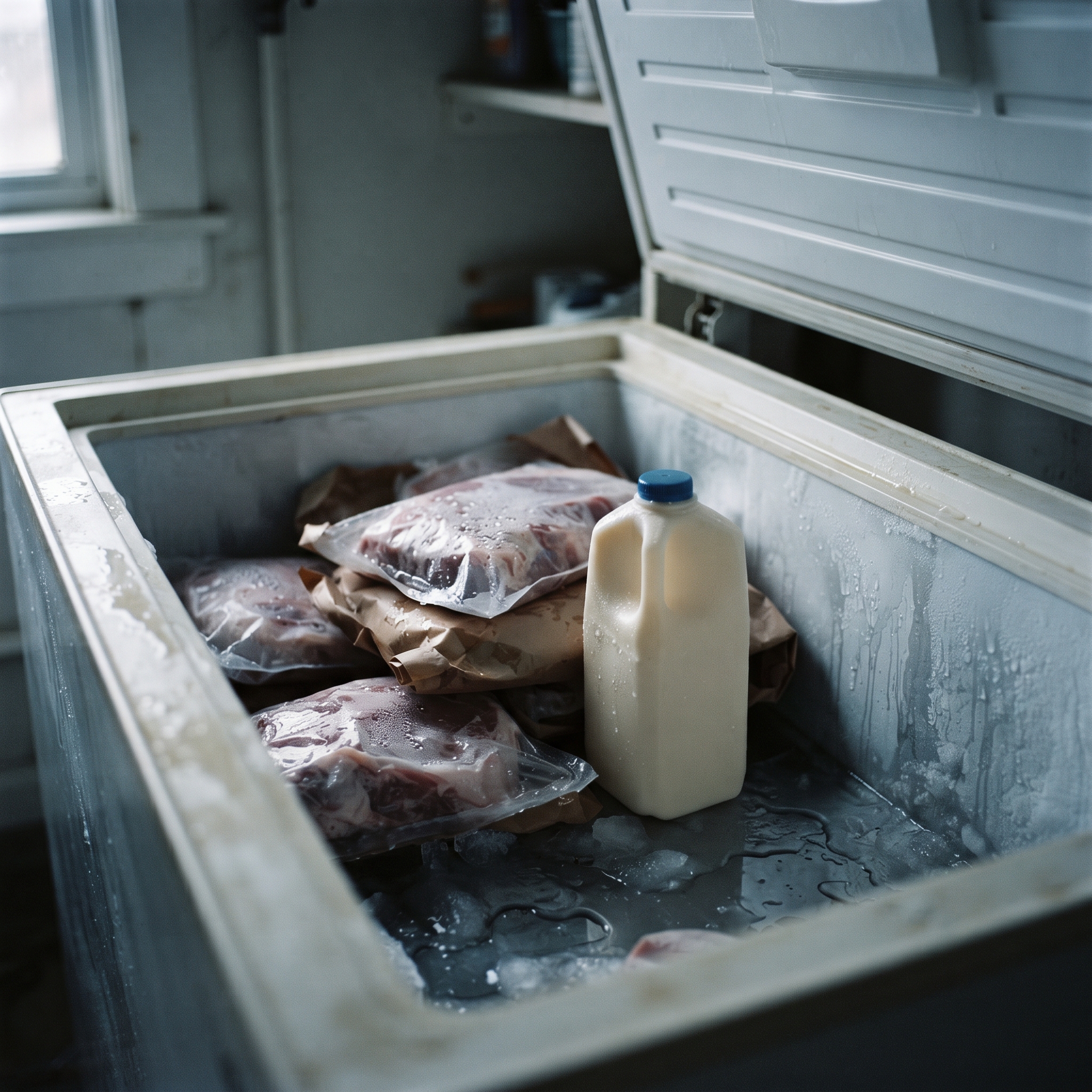
Renata Ortiz, a mother of three in San Antonio, Texas, opened her chest freezer three days after a September 2026 storm knocked out power across Bexar County and found roughly $180 worth of meat, milk, and frozen vegetables ruined. She assumed nothing could be done about groceries that had simply gone bad. A neighbor told her otherwise: because Texas had just gotten federal approval to extend the reporting window for households in the affected area, she had 20 days to report the loss, not the usual 10, and the Supplemental Nutrition Assistance Program (SNAP) would replace part of it.
The 10-day rule most families never hear about
Under 7 CFR § 274.6(a)(3)(i), a household’s report of food destroyed in a “household misfortune” is only considered timely “if it is made to the State agency within 10 days of the date food purchased with Program benefits is destroyed.” Miss that window under normal, non-disaster conditions, and the state agency can deny the replacement even if the loss itself was real and documented.
What counts, and what you have to submit
A “household misfortune” isn’t formally limited to any one cause in the regulation; a power outage, a fire, and a flood are the situations state agencies see most often. What the household has to provide is specific: a signed statement attesting to the loss, per § 274.6(a)(4)(i), describing what happened and confirming the food was destroyed. States generally handle these reports through the same county or regional SNAP office that manages a household’s regular case, often by phone, online portal, or in person; check your state SNAP agency’s own instructions for the exact method.
The cap: what one month’s allotment is actually worth
Replacement isn’t calculated from a receipt or a household’s estimate of what spoiled. Under § 274.6(a)(3)(iii), the state agency replaces losses “up to a maximum of one month’s allotment,” meaning the ceiling is tied to your household size’s maximum SNAP benefit, not the dollar total of the food itself.
| Household size | One month’s cap now (through Sep 30, 2026) | One month’s cap starting Oct 1, 2026 |
|---|---|---|
| 1 | $298 | $306 |
| 2 | $546 | $562 |
| 3 | $785 | $808 |
| 4 | $994 | $1,023 |
| 5 | $1,183 | $1,217 |
For a family of four like Renata’s, that means a maximum possible replacement of $994 right now, or $1,023 for a loss reported on or after October 1, 2026, when USDA’s next cost-of-living adjustment takes effect. A household that lost $180 in groceries will typically be replaced for what it actually documents, up to that ceiling, not the ceiling itself.

When a whole region gets more time
After a federally declared disaster, USDA can approve a state’s request to extend the standard reporting window. That’s what happened in Bexar County: the Texas Health and Human Services Commission received USDA approval to double the window from 10 days to 20 days, through September 17, 2026, for households whose food was destroyed by the September storms and the power outages that followed.
A separate, larger program exists for federally declared disasters: Disaster SNAP, or D-SNAP, which can open eligibility to households who don’t normally qualify for SNAP at all, once a disaster “disrupts commercial channels of food distribution.” Under § 274.6(a)(2), a household can’t collect both a disaster allotment and a regular misfortune replacement for the same loss event, so if your area has an active D-SNAP program, ask your state agency which path applies to your situation before filing either request.
What families get wrong
The most common mistake is assuming nothing can be done and never filing a report at all. The second is waiting past the deadline, assuming the state will simply know from news coverage of an outage that a household’s food was destroyed. Replacement is never automatic. It requires a signed statement filed inside the reporting window, whether that’s the standard 10 days or an extended window your state has announced.
Frequently asked questions
What counts as a “household misfortune” for SNAP replacement? The regulation doesn’t limit it to a fixed list, but power outages, fires, and floods are the situations state agencies handle most. What matters is that food bought with SNAP benefits was destroyed, and that you report it within your state’s window.
How much food will SNAP actually replace? Replacement is capped at one month’s maximum SNAP allotment for your household size, per 7 CFR 274.6(a)(3)(iii), not the full value of what you lost. A family of four’s cap is $994 right now, rising to $1,023 for losses reported on or after October 1, 2026.
What if my area just had a federally declared disaster? Ask your state SNAP agency whether Disaster SNAP (D-SNAP) has opened for your area. You can’t receive both a disaster allotment and a regular misfortune replacement for the same loss, per 7 CFR 274.6(a)(2), so the agency will direct you to the right one.
What do I need to submit to request replacement? A signed statement attesting to your household’s loss, describing what happened and confirming the food was destroyed, per 7 CFR 274.6(a)(4)(i). Contact your state or county SNAP office for their specific method.
Families rebuilding their pantry after a loss like this may also want to read how to apply for SNAP with kids if this is a household’s first time applying, or our guide to the separate summer food-benefit program known as Summer Electronic Benefit Transfer (EBT), covered in Summer EBT eligibility, if school-age children are also missing meals outside the school year. Families with a baby or toddler in the household should also see the add-on benefit offered through the Special Supplemental Nutrition Program for Women, Infants, and Children (WIC), covered in WIC’s Farmers Market Nutrition Program, for a separate, smaller benefit that can help stretch a tight grocery budget after a loss like this.





Leave a Reply