
6 min read · Last updated August 13, 2026
- LIHEAP pays for summer cooling bills, not only winter heating. Coverage includes electric bill help, fan or AC unit repair, and in some states, unit replacement.
- Federal law caps state income limits at the greater of 150% of the poverty level or 60% of state median income (42 U.S.C. § 8624).
- For a family of four under the 2026 federal poverty guidelines, 150% of poverty works out to about $49,500 a year, roughly $4,125 a month.
- States cannot exclude a household earning less than 110% of the poverty level, even if their program’s normal cutoff is lower.
In this article
- Cooling assistance is a real LIHEAP benefit, not just heating
- What the income limit actually is for your family size
- What LIHEAP cooling assistance actually pays for
- What most families get wrong
- How to apply before the heat spikes your bill
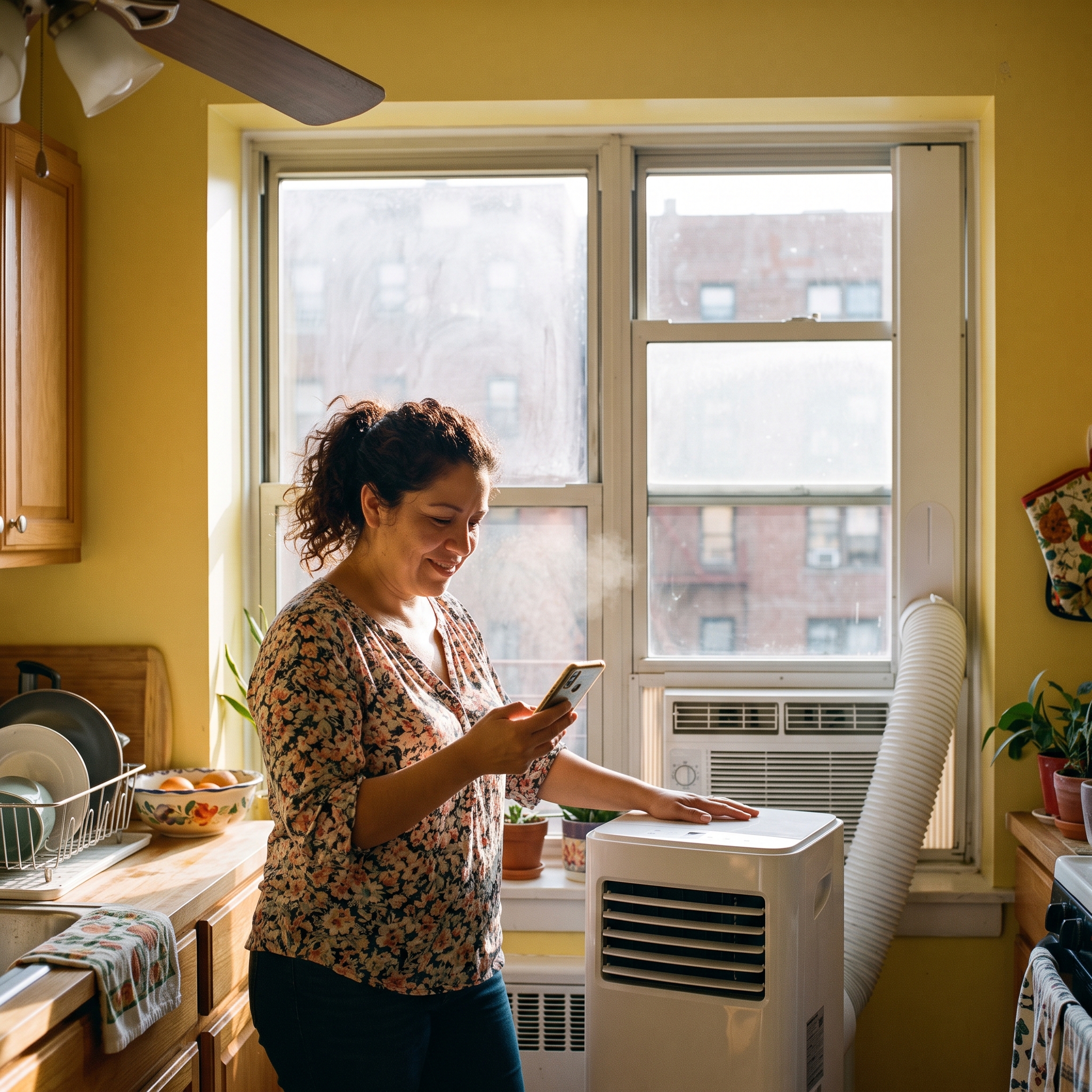
DeShawn and his wife have three kids under 10 in a second-floor apartment outside Phoenix. Their July electric bill hit $412, almost double their winter average, because their window units ran nearly around the clock during a stretch of 108-degree days. DeShawn assumed the Low Income Home Energy Assistance Program (LIHEAP) only covered heating bills in the winter. It doesn’t. LIHEAP has run a summer cooling assistance component for years, and most families who’d qualify never apply for it because they’ve never heard it exists.
Cooling assistance is a real LIHEAP benefit, not just heating
LIHEAP is a federally funded program, run through the Administration for Children and Families, that helps low-income households cover home energy costs. The program’s own description is explicit that it exists “to help you stay warm in the winter and cool in the summer,” through help with energy bills, minor energy-related home repairs, and emergency assistance during an energy crisis. Every state, D.C., every U.S. territory, and most tribal nations run some version of it, but cooling assistance windows, amounts, and even whether a state offers cooling help at all vary state by state. Check your state’s specific cooling program through the LIHEAP Clearinghouse, which maintains state-by-state program details.
What the income limit actually is for your family size
Federal law sets the outer boundary every state’s LIHEAP income limit has to fall within. Under 42 U.S.C. § 8624, a state’s income eligibility limit can be no higher than the greater of 150% of the federal poverty level or 60% of the state’s median income. States can set their limit lower than that, but the same law says a state can’t exclude a household earning less than 110% of the poverty level, no matter how low its normal cutoff runs.
| Household size | 2026 poverty level (100%) | Federal LIHEAP ceiling (150%) |
|---|---|---|
| 1 | $15,960/yr | $23,940/yr |
| 2 | $21,640/yr | $32,460/yr |
| 3 | $27,320/yr | $40,980/yr |
| 4 | $33,000/yr | $49,500/yr |
| 5 | $38,680/yr | $58,020/yr |
For DeShawn’s family of five, that means a household earning up to roughly $58,020 a year could still fall within the federal ceiling, though his actual state program may set its real cutoff anywhere between 110% of poverty and that top limit, or use the state median income formula instead if it’s higher.
What LIHEAP cooling assistance actually pays for
Cooling assistance isn’t limited to a check toward your electric bill. Depending on your state’s program design, it can include help paying your summer electric bill directly, repair of a broken air conditioner or fan, and in some states, replacement of a unit that’s beyond repair. Some states also run a summer “crisis” component, similar to the winter heating crisis benefit, for households facing an imminent disconnection or already without cooling during a heat emergency, which usually processes faster than the standard benefit.
What most families get wrong
The most common mistake is assuming LIHEAP is a once-a-year, heating-only benefit, and skipping the summer application because they already used their winter benefit. In many states, heating and cooling assistance are separate benefit periods with separate applications, meaning a family that got winter heating help is not automatically disqualified from also applying for summer cooling help. The second most common mistake is assuming your income is too high. Because the federal ceiling runs up to 150% of poverty or 60% of state median income, whichever is higher, a lot of working families who’d never think to apply are still inside the limit.
How to apply before the heat spikes your bill
- Check whether your state runs a separate cooling application. Some states combine heating and cooling into one annual application; others require a second one specifically for summer.
- Apply before the peak of the season, not after your bill already spiked. Funding is limited and distributed on a first-come, first-served basis in most states once the season opens.
- Bring your most recent utility bill and proof of income for everyone in the household. Most states also accept proof you already receive SNAP, SSI, or TANF as automatic income verification.
- Ask specifically about the crisis component if your cooling has already failed or your power is at risk of disconnection. This track moves faster than a standard application.
- Find your state’s exact application through your state’s Community Action Agency or the LIHEAP Clearinghouse state directory.
If your state’s LIHEAP program is new to you, our overview of LIHEAP energy bill help for families covers the winter heating side in detail, and pairing LIHEAP with the Weatherization Assistance Program can lower your cooling bill for good instead of just covering it season to season.
Frequently asked questions
Does LIHEAP actually help with summer air conditioning bills? Yes. LIHEAP funds both winter heating and summer cooling assistance, including help with electric bills tied to air conditioning, repair of broken cooling equipment, and in some states, unit replacement. Availability and dollar amounts still vary by state program.
What is the income limit for LIHEAP in 2026? Federal law caps state limits at the greater of 150% of the federal poverty level or 60% of state median income. For a family of four, 150% of the 2026 poverty level works out to about $49,500 a year. Your specific state may set its real limit lower.
Can I get both winter heating help and summer cooling help in the same year? In many states, yes, because heating and cooling assistance run as separate benefit periods with separate applications. Getting winter help doesn’t automatically disqualify you from applying again for summer cooling assistance. Confirm this with your state’s program.
What if my air conditioner is already broken and it’s dangerously hot? Ask about your state’s crisis or emergency cooling component. It’s designed for households facing an active disconnection or already without working cooling during extreme heat, and it typically processes faster than a standard application.
Is there a minimum income too low to qualify? No. Federal law prohibits states from excluding a household earning less than 110% of the federal poverty level, even if the state’s normal program cutoff is set lower than that for other applicants.





Leave a Reply