
7 min read · Last updated September 24, 2026
- The Child Care and Development Fund (CCDF) can pay a grandparent, aunt, uncle, or neighbor directly for child care, including overnight and weekend hours most licensed centers don’t cover.
- A relative provider can be exempt from full state licensing rules. Federal guidance strongly recommends a background check for them too, and most states require it before any CCDF subsidy payment goes out.
- Federal regulation 45 CFR § 98.16 requires states to describe how they pay providers differently to build up nontraditional-hours care, which is why the rate a relative gets paid is often lower than a licensed center’s rate.
- Nonstandard-hours coverage, second shift, third shift, and weekends, is the gap most subsidy systems handle worst, and it is exactly the gap this kind of provider exists to fill.
A grandparent, aunt, uncle, or trusted neighbor can be paid directly through the CCDF childcare subsidy for license-exempt care, including overnight and weekend hours, once they clear the background check your specific state requires for that arrangement.
In this article
- What CCDF actually lets you do here
- The background check question, answered honestly
- Why the reimbursement rate is usually lower
- How to actually set this up
- What to do if the provider is denied
- Frequently asked questions
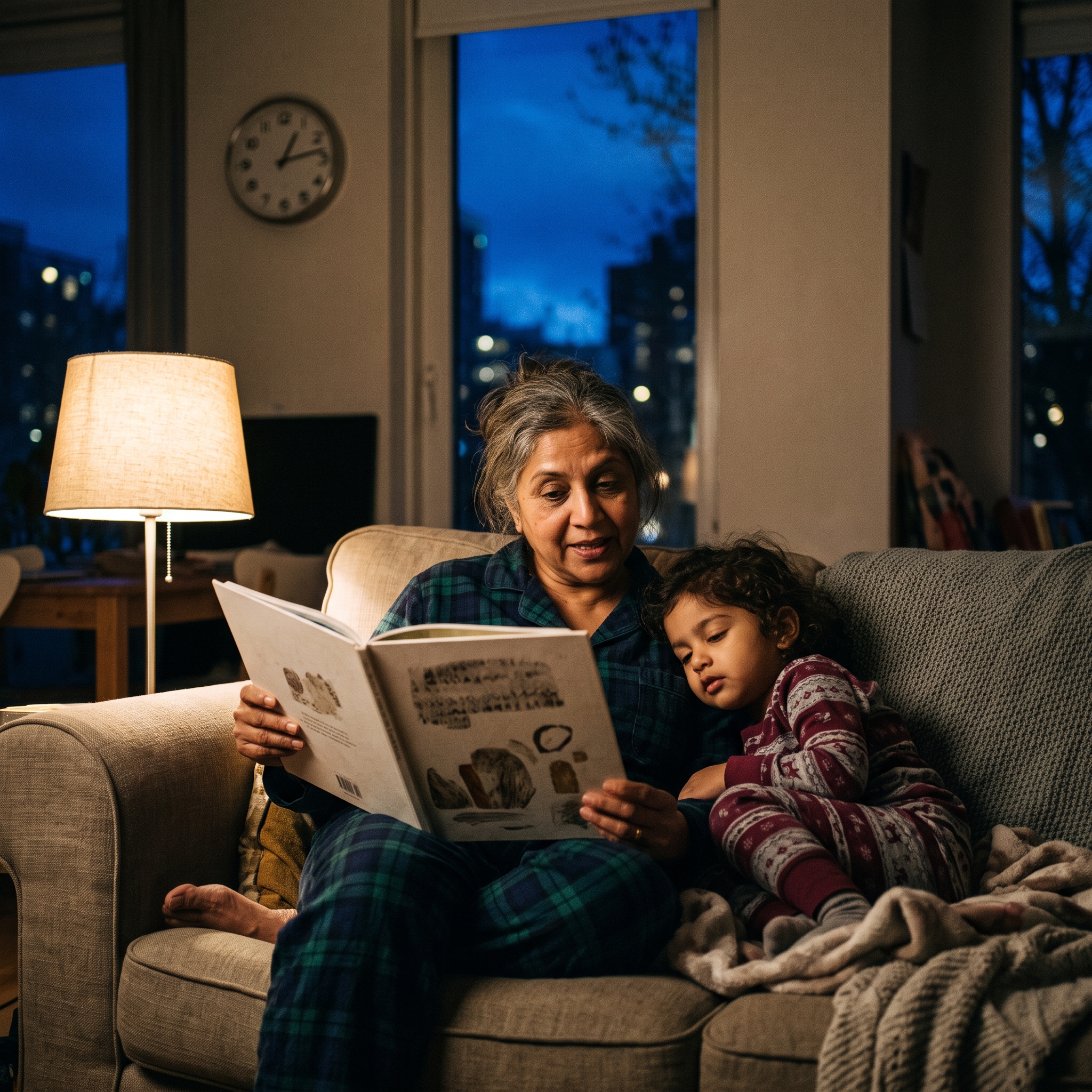
Denise Okafor works the overnight shift at a distribution warehouse, clocking in at 10 p.m. and out at 6 a.m. Not one licensed daycare center in her county opens before 6 a.m. or stays open past midnight. Her mother, who lives fifteen minutes away, was already the obvious answer. What Denise didn’t know for months was that her mother could actually get paid for it.
What CCDF actually lets you do here
The Child Care and Development Fund is the federal-state subsidy program most people just call “the childcare subsidy.” It does not require the provider to be a licensed daycare center. Federal rule allows states to pay what’s usually called a family, friend, or neighbor (FFN) provider, someone like a grandparent, an aunt, an adult sibling in a separate home, or a trusted neighbor, directly for watching an eligible child, including during hours a licensed center would never staff.
This matters most for exactly Denise’s situation. Second-shift and third-shift work doesn’t pause for a 6 p.m. daycare pickup deadline, and most licensed centers are built around a standard 7 a.m. to 6 p.m. day. A relative who already has a relationship with the kids, and is already awake at the hours the job needs, closes a gap the licensed system usually can’t. It’s a narrower version of the center-versus-home-versus-relative provider choice every CCDF family makes, focused specifically on the hours a standard daytime provider can’t cover.
The background check question, answered honestly
Here’s the part families most often get wrong in both directions: “license-exempt” does not automatically mean “no check at all,” but it also isn’t a flat federal mandate the way it is for a licensed center’s staff. Under 45 CFR §§ 98.41(c) and 98.42(c), a state can exempt certain relative providers, specifically named as grandparents, great-grandparents, siblings in a separate residence, aunts, or uncles, from the full slate of licensing health-and-safety rules that apply to a commercial daycare. The federal government’s own child care office, in its background check policy guidance, “strongly recommends” a comprehensive check for every provider paid through CCDF, licensed or not, but leaves the actual decision for an exempt relative provider up to each state.
In practice, that recommendation means most states require it anyway, and it typically covers:
| Requirement | Licensed center staff | License-exempt relative provider |
|---|---|---|
| Comprehensive background check | Federally required | Federally recommended; required by most states as a state condition |
| Basic health and safety training | Required, full curriculum | Required, usually a shorter state-set module |
| Facility licensing inspection | Required | Typically exempt for a relative caring for a related child |
| Annual monitoring visit | Required | Varies by state, often reduced frequency |
| Reimbursement rate | Set at the center’s licensed rate | Usually a lower flat or hourly rate set by the state |
The training requirement is real but usually short: most states run a basic health-and-safety module covering things like safe sleep, emergency procedures, and recognizing illness, not the full curriculum a licensed center’s staff completes. Ask your local Child Care Resource and Referral agency whether your state requires the check for a relative provider and what the exact training module involves, since both answers vary and neither is safe to assume.
Why the reimbursement rate is usually lower
This is the trade-off nobody explains up front. Federal regulation 45 CFR § 98.16 requires every state’s CCDF plan to describe its strategy for building up the supply of nontraditional-hours care, and it specifically names “alternative payment rates to child care providers” as one of the tools states are expected to use. In practice, most states use that flexibility to set a separate, usually lower, flat or hourly rate for license-exempt relative and FFN providers compared to what a licensed center is paid.
The rate exists because the state is trading a lower per-hour cost for coverage a licensed center structurally can’t provide at 10 p.m. It is not a penalty against the relative provider. It is worth asking your caseworker for the exact rate before you commit your mother, aunt, or neighbor to the arrangement, since it varies significantly by state and can be a genuinely large drop from the center rate.
How to actually set this up
Start with your state’s CCDF subsidy application and name the specific relative or FFN provider on it. Ask your caseworker directly whether your state requires a background check for a license-exempt relative provider; in states that do, it has to clear before the first subsidized care day, not retroactively. Ask two more things up front: the exact nonstandard-hours reimbursement rate for a license-exempt provider in your county, and whether your state pays for partial nights or requires a minimum block of hours to bill.
What families get wrong or miss
The most common mistake is assuming a relative automatically qualifies just because they’re family, without confirming whether your state requires a background check for that arrangement; where it’s required, a provider who hasn’t cleared it yet cannot be paid retroactively for care given before approval. The second is not asking about the nonstandard-hours rate before agreeing to the arrangement, then being surprised the payment is meaningfully lower than what a friend’s licensed daycare bill looks like.
What to do if the provider is denied
A background check denial, in a state that requires one, is not always final. States are required to have an appeal or reconsideration process, and a denial based on an old or minor record is sometimes reversible. If the issue is the state’s processing time rather than the check itself, ask your caseworker directly whether an emergency or provisional approval is available while the full check completes, since some states offer this for exactly Denise’s kind of urgent-need situation.
Frequently asked questions
Can my mother really get paid to watch my kids overnight? Yes, in most states, once she clears whatever background check and basic health-and-safety training your state requires for a license-exempt relative provider. She does not need a daycare license to be paid through CCDF.
Is the background check different for a relative than for a daycare worker? Often, yes. A licensed center’s staff face a federally mandated comprehensive check under 45 CFR § 98.43. A license-exempt relative is federally recommended for one, not mandated the same way, so whether it’s required depends on your specific state’s policy.
Why does my aunt get paid less per hour than the daycare center down the street? States are allowed to set a separate, usually lower, payment rate for license-exempt relative and FFN providers under 45 CFR § 98.16. It reflects the lighter licensing and facility overhead, not the value of the care itself.
Does the provider need their own home to be licensed for this? Generally no, if they qualify for the relative exemption under your state’s plan. Some states do still require a basic home safety check even for an exempt provider, so confirm this with your local CCDF office.
What if no licensed center is open during my work hours at all? This is exactly the gap nonstandard-hours CCDF payment rules exist to address. Ask your caseworker specifically about license-exempt and FFN provider payment options rather than assuming the subsidy only applies to a traditional daycare center.





Leave a Reply