
7 min read · Last updated September 17, 2026
- In project-based rental assistance, the subsidy belongs to a specific apartment unit, not to your family, so moving out generally means losing the assistance entirely.
- Because each property keeps its own waiting list rather than sharing one master list, a family can apply to more than one project-based building at the same time.
- After one full year living in a project-based unit, federal rules give a family the right to move and request a tenant-based voucher instead, one that follows the family to any qualifying home.
- A tenant-based Housing Choice Voucher works the opposite way from day one: it belongs to the family and moves with them, but usually means a longer wait to get one at all.
Project-based rental assistance ties the subsidy to a specific apartment unit rather than to the family, so a family can apply to several buildings’ separate waiting lists at once, but generally loses the assistance if they move out, unless they have lived there a full year and use the federal right to trade it for a portable voucher instead.
In this article
- Two different ways rental assistance can work
- Why a family can apply to several buildings at once
- How to apply, and how the assistance actually attaches to you
- What most families get wrong, and the right to move after one year
- Frequently asked questions
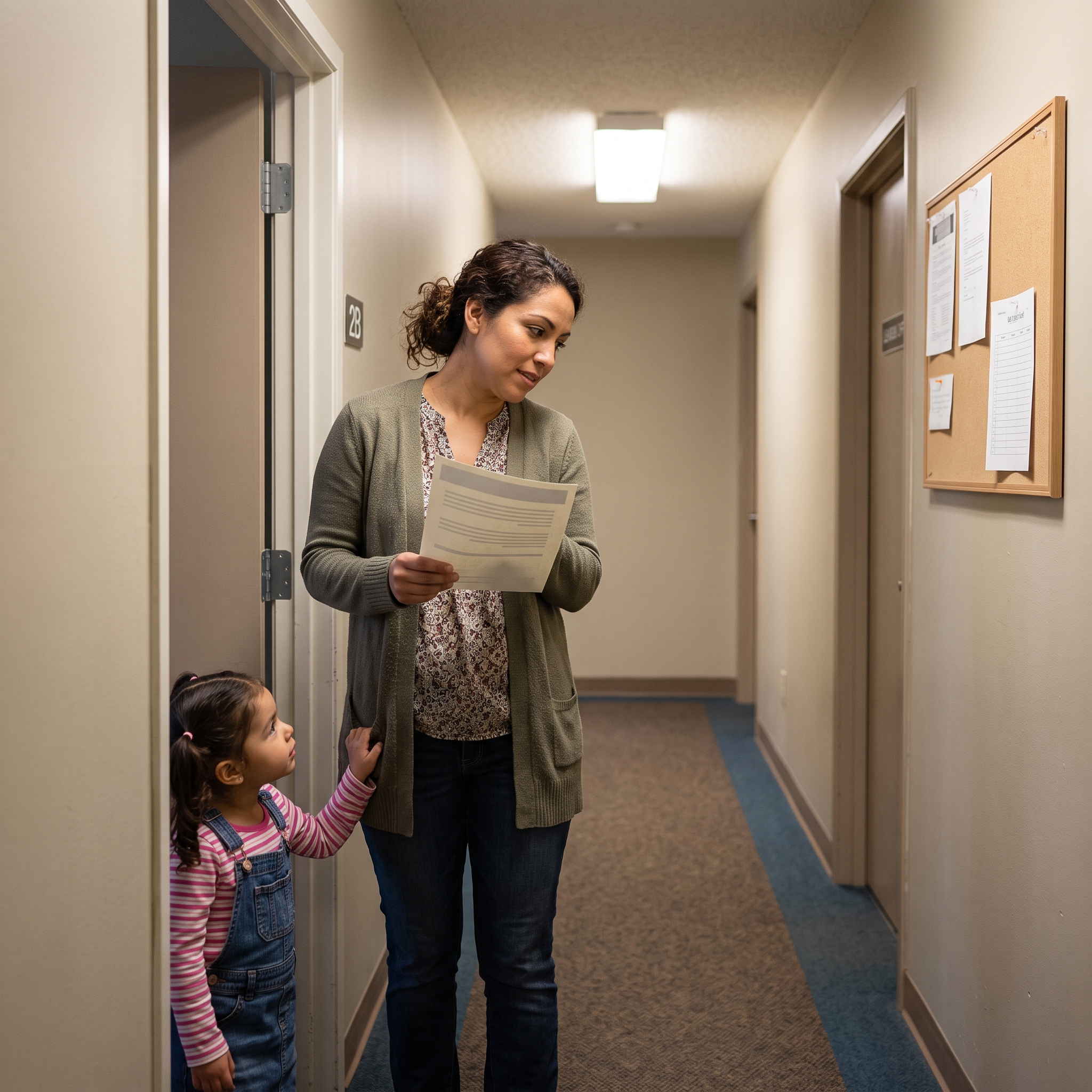
Maria and her two kids spent fourteen months on a single public housing authority’s Housing Choice Voucher waiting list before giving up and applying directly to three different apartment buildings that each had their own, much shorter waiting list for rental assistance already built into specific units. She got into the second building four months later, and only then learned the assistance was attached to that exact apartment, not to her family, which meant she could not simply pack up and take it to a better unit down the street the way a voucher would have let her.
Two different ways rental assistance can work
The U.S. Department of Housing and Urban Development (HUD) runs two structurally different kinds of rental help. A tenant-based Housing Choice Voucher is issued to a family by their local public housing authority (PHA) and moves with that family to any landlord willing to accept it, anywhere the PHA that issued it allows. Project-based rental assistance works the other way: the subsidy is attached to a specific unit inside a specific building under a contract between the owner and the PHA, and a family only receives the benefit for as long as they live in that exact unit.
This means the apartment itself is what is subsidized, not the household. If a project-based tenant moves out for any reason other than the formal process described below, the assistance stays behind with the unit and goes to the next family who moves in.
Why a family can apply to several buildings at once
A tenant-based voucher waiting list is typically one shared list per public housing authority, covering every family hoping for a voucher across that entire jurisdiction, which is why those lists can run into the thousands and take years to clear. Project-based assistance works differently at the application stage: under HUD’s own Project-Based Voucher (PBV) program regulations in the Code of Federal Regulations (CFR), 24 CFR § 983.251, a housing authority “may use separate waiting lists for PBV units in individual projects or buildings,” meaning each participating building can maintain its own separate list rather than sharing one master list with every other property in the area.
Because each project’s list is separate, a family is not limited to picking one building and waiting. Applying to several project-based properties at the same time, the way Maria did, means the family’s odds depend on the sum of several separate, usually shorter lists rather than on one long, shared one.
| Tenant-based voucher | Project-based rental assistance | |
|---|---|---|
| Who the subsidy belongs to | The family | The specific apartment unit |
| Waiting list structure | One shared list per housing authority | Often a separate list per building |
| Can you apply to more than one at once | No, one authority’s list at a time | Yes, several buildings at once |
| What happens if you move | Assistance moves with you | Assistance stays with the unit, unless you qualify for the family right to move |
| Best for | Families who need flexibility on where they live | Families who need a faster path into a subsidized unit right now |
How to apply, and how the assistance actually attaches to you
To apply for project-based rental assistance, contact the specific apartment properties in your area that participate in the program directly, not just your local public housing authority, since many of these buildings keep their own application and waiting list. Ask each property whether its list is currently open, since some pause new applications when they are long enough. You will still go through an income eligibility determination administered by the PHA that holds the contract with that building, so bring the same documents a voucher application would need: proof of income, household size, and identification for every household member.

Once a family is housed in a project-based unit and the lease begins, the PHA determines the household eligible and the subsidy attaches to that specific address for as long as the family remains there and continues to meet program rules.
What most families get wrong, and the right to move after one year
The mistake Maria made is the most common one in this entire program: assuming that once you have any form of federal rental assistance, it travels with you the way a voucher does. It does not, unless you use the formal path described in federal rules. Under 24 CFR § 983.261, the “family right to move” regulation, a family may terminate the lease on a project-based unit at any time after one full year of assistance in that unit, and the housing authority must then offer the family “the opportunity for continued tenant-based rental assistance,” meaning a voucher or a comparable form of assistance that moves with them going forward. The family has to contact the PHA before giving notice to the landlord, and if a voucher is not immediately available, the regulation requires the PHA to give that family priority for the next one that opens up.
Before the one-year mark, a family generally cannot convert project-based assistance into a portable voucher just because their circumstances changed. Plan around the one-year point deliberately if portability matters to your family’s plans, rather than assuming the option exists from day one.
If you are denied, or the building’s list closes
If a specific building’s list is closed or full, that closure applies only to that property. Apply to a different participating building rather than treating one closure as a network-wide denial, since separate buildings run separate lists on separate timelines. If your household is denied eligibility for a program-related reason, ask the PHA holding that project’s contract for its appeals process, which is a formal right, not a courtesy. And if you are already past your first year in a project-based unit and need to move, start the right-to-move conversation with your PHA before you give notice to your landlord, since the regulation requires that contact to happen first.
For families who already have a tenant-based voucher and are considering a move, see our guide to Housing Choice Voucher portability, and for the waiting-list side of this decision, our guide to how local preferences affect housing waitlists covers a related piece of this same puzzle.
Frequently asked questions
Can I be on a project-based waiting list and a tenant-based voucher waiting list at the same time? {#both-lists} Yes. These are entirely separate programs with separate lists, so applying to one does not affect or replace your standing on the other. Many families apply to both to improve their overall odds of getting into subsidized housing sooner.
What happens to my project-based assistance if I need to move before one year is up? {#move-before-one-year} Generally, moving out before the one-year mark means giving up that unit’s assistance entirely, since the “family right to move” protection only becomes available after a full year in the unit. Talk to your building’s management before making an early move if at all possible.
Does the one-year clock restart if I switch to a different project-based unit within the same building? {#clock-restart} This depends on your specific PHA’s administrative plan, since the regulation covers a family’s continuous assistance under the program rather than one exact unit in every case. Ask your housing authority directly how it handles this situation before assuming either way.
Is project-based assistance the same thing as public housing? {#same-as-public-housing} No. Public housing is owned and operated directly by a housing authority. Project-based rental assistance involves privately or nonprofit-owned buildings that have a separate contract with a housing authority to receive subsidy payments for specific units.





Leave a Reply