
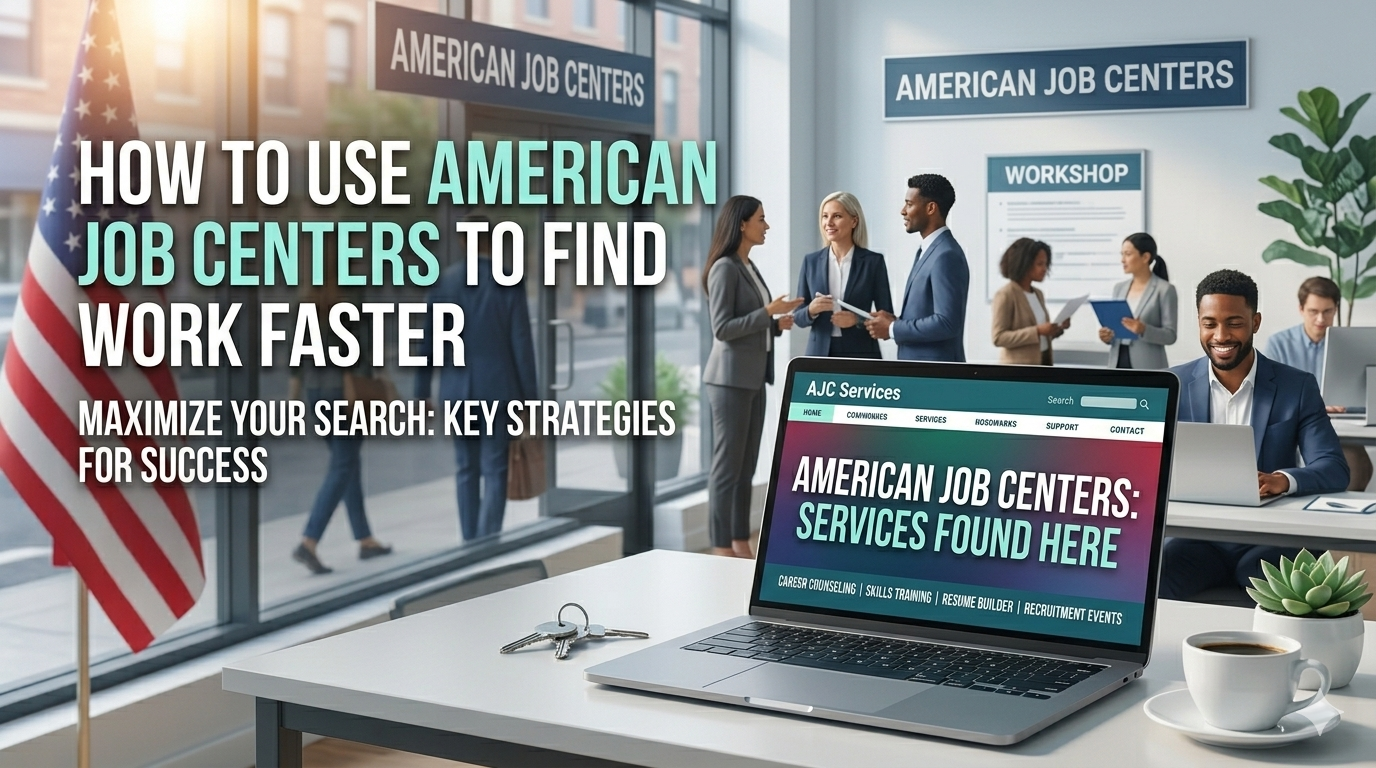
American Job Centers are one of the most underused employment resources in the country despite being available in every state. Operated through a federally funded network, these centers provide free job search assistance, career counseling, skills assessment, resume help, and direct connections to employers who are actively hiring in your area. Yet most job seekers have never walked through the door of their local center.
The perception is that job centers are outdated government offices with limited practical value for modern job seekers. The reality is quite different. Modern American Job Centers partner with local employers, community colleges, and training providers to create structured pathways that move job seekers from unemployment to stable employment. The services are entirely free, and many of them are only available through the center, not through any online job board or website. Registering with your state job service website as soon as you file for unemployment ensures you meet the requirement that many states impose as a condition of receiving weekly benefit payments. Attending at least one job fair or employer hiring event each month expands your network and creates face-to-face impressions that online applications alone do not provide to hiring managers. Keeping a written log of every job search contact including the date, employer name, position title, and method of application satisfies the documentation requirement most states enforce during audits.
What Services American Job Centers Provide
The services go far beyond posting job listings on a bulletin board. They include personalized career planning, funded skills training, employer networking events, and support services that remove barriers.
Career counseling is the foundation of the center experience. A dedicated career counselor evaluates your work history, skills, interests, and goals during an initial assessment. Together, you build an individual employment plan that identifies the most promising career path based on the local labor market data and your personal strengths. Resume after workforce gap challenges are common among center visitors, and staff are experienced in helping career returners present their qualifications effectively.
Job fairs and employer hiring events happen regularly at or through American Job Centers throughout the year. Meeting an employer in person gives you an opportunity to make an impression that a digital application simply cannot replicate. Computers, printers, phones, and fax machines are available for free at most center locations for job seekers who need technology access to complete applications and communicate with potential employers.
Training Programs and Credential Support
American Job Centers connect qualified individuals with federally funded training that leads to industry-recognized credentials and certifications at no cost to the participant.
WIOA-funded Individual Training Accounts pay for approved training programs at community colleges, trade schools, and certified training providers in your area. The career counselor at your center helps you identify which programs are approved under WIOA guidelines, which ones align with your career goals, and how to apply for the training funding. Apprenticeship opportunities are accessible through the center network as well.
Support services remove practical barriers that prevent people from completing training programs or maintaining employment after they find a job. Transportation assistance, childcare subsidies, work clothing, professional tools, and licensing exam fees are covered for qualifying participants in many states. These services recognize that finding a job sometimes requires solving logistical problems before the job search itself produces results.
Special Programs for Veterans, Youth, and Displaced Workers
American Job Centers operate specialized programs for populations that face unique employment challenges and need targeted support beyond general services.
Veterans receive priority of service at all American Job Centers nationwide. Dedicated veteran employment representatives provide specialized counseling that addresses military-to-civilian career transition challenges, credential translation from military to civilian job titles, and employer connections with companies that actively recruit veterans for open positions.
Youth programs serve in-school and out-of-school young people ages 14 to 24. These programs provide paid work experience, career exploration activities, academic tutoring, mentorship from working professionals, and leadership development opportunities. Rapid response services help workers displaced by mass layoffs and plant closings by coordinating on-site transition support before or immediately after the layoffs take effect.
How to Get Started at Your Local Center
Finding your nearest American Job Center and accessing services takes less than five minutes to begin the process.
Visit CareerOneStop.org and enter your zip code to find the closest center. Bring your resume when you have one, along with identification and any documents related to your work history or education. When you do not have a resume prepared, the center staff will help you create one during your first visit to the center.
Follow up consistently after your initial visit to get the most value from the center. The job seekers who benefit most from American Job Centers are the ones who return regularly, attend scheduled workshops, participate in hiring events, and maintain ongoing communication with their assigned career counselor throughout the search process.



Leave a Reply