
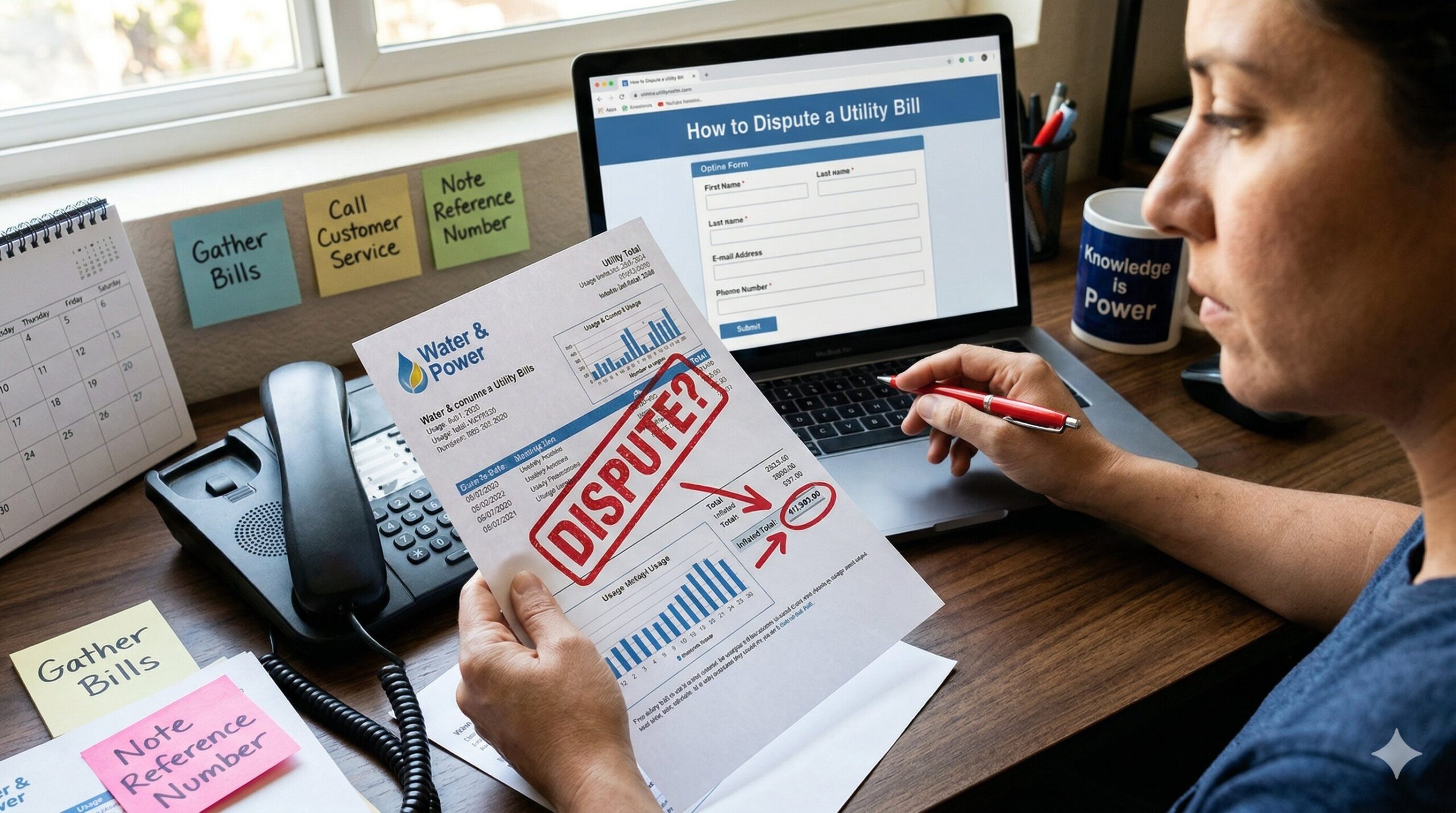
Utility bills are not immune to errors. Meters malfunction, estimated readings replace actual ones, billing systems apply incorrect rate codes, and simple data entry mistakes happen more often than most utility companies publicly acknowledge. If you receive a bill that seems dramatically higher than your typical usage, that covers a period when your household was not even home, or that includes line items you do not recognize, you have every right to dispute it and every reason to follow through. Utility companies make billing errors regularly and rarely volunteer corrections. The customer who does not ask does not receive one. The process is more straightforward than most customers expect, and in many cases it results in a corrected bill or a direct credit to your account.
Understanding Your Bill Before You Call
Before you contact your utility company, review your bill carefully and compare what you were charged against your recent history. Look at the usage amount reported in kilowatt hours, therms, or gallons and compare it to the same billing period from prior years. Most utilities include a 12-month usage history on your bill or in your online account dashboard. A sudden dramatic spike in reported usage, especially when your habits and household size have not changed, is a clear red flag worth investigating before you pay. Also check the rate code applied to your account. Some customers are accidentally placed on commercial rates when they qualify for residential rates, or on a standard rate when they should be on a low-income discount program. Internet discount programs and bundled service accounts can also introduce billing errors when services are reconfigured mid-cycle, so if you have bundled utilities review each line item rather than just the total. Understanding exactly what you were charged for and why gives you a factual and specific basis for your dispute.
Filing a Formal Dispute and Requesting a Meter Re-Read
Call the customer service number printed on your bill and tell the representative you want to file a formal billing dispute, not just raise a concern or ask a question. Asking specifically for the dispute or billing adjustment process ensures your complaint is logged into the company’s official dispute system rather than noted informally and forgotten. Request a meter re-read if you have reason to believe the usage figure on your bill is wrong. Most utilities will send a technician to physically read the meter again at no additional charge, and if the re-read shows a different number than what was billed, the company must issue a corrected bill based on the accurate reading. A protection worth knowing about: many states have utility commission rules that limit or delay disconnection for a disputed amount while a formal review is underway, though the exact protection and its conditions vary by state and by utility type, so confirm the rule with your state’s Public Utilities Commission (see below). Filing the dispute formally, not just complaining verbally, is what can trigger this kind of protection where it exists, and it gives you documented evidence of the date the dispute was initiated if the matter escalates later.
Escalating to Your State Regulator and Arranging Payment
If your utility company does not resolve the dispute to your satisfaction within a reasonable timeframe, your next step is to file a complaint with your state’s Public Utilities Commission, also called the Public Service Commission or Corporation Commission depending on where you live. These regulatory bodies have direct oversight authority over how utilities bill their customers and can require the company to conduct a full account audit, produce usage documentation, and issue corrections when billing errors are confirmed. Filing a complaint with the state commission is free and can usually be done online in under 15 minutes. Utilities take regulatory complaints seriously because their compliance record affects their rate case applications and their standing with the commission. While the dispute is pending, request a payment arrangement for the undisputed portion of the bill, which is typically your average monthly amount. Paying what you do not dispute and holding the remainder pending resolution demonstrates good faith and prevents the account from accumulating a large delinquent balance while the review proceeds. Ask the utility to document this arrangement in writing so you have a record if the company later treats the full amount as unpaid.
A wrong utility bill is worth the effort to challenge. Filing a formal dispute protects you from disconnection during the review, costs nothing to initiate, and carries a reasonable chance of resulting in a corrected amount or a credit. Start by reviewing your usage history carefully before you make a single call. Then open a formal dispute, request a meter re-read if the numbers look wrong, document every interaction you have with the company during the review, and escalate to your state commission without hesitation if the utility’s response is incomplete or unsatisfactory. The regulatory process is free and it exists precisely for situations like this one.
Frequently Asked Questions
How do I know if my utility bill is actually wrong before I call? Compare the usage amount in kilowatt hours, therms, or gallons against the same billing period from prior years, using the 12-month usage history most utilities include on your bill or online dashboard. A sudden dramatic spike in usage when your habits and household size have not changed is a clear red flag worth investigating. Also check the rate code applied to your account, since some customers are accidentally billed at commercial rather than residential rates.
What should I actually say when I call to dispute a bill? Tell the representative you want to file a formal billing dispute, not just raise a concern or ask a question. Using that specific language ensures your complaint is logged into the company’s official dispute system rather than noted informally and forgotten. You can also request a meter re-read if you believe the usage figure itself is wrong.
Can my utility company shut off my service while a dispute is pending? It depends on your state. Many states have utility commission rules that limit or delay disconnection for a disputed amount while a formal review is underway, though the specifics vary, so check with your state’s Public Utilities Commission. Filing a formal billing dispute, not just complaining verbally, is what can trigger this kind of protection where it exists, which is a key reason to insist on the formal dispute process rather than an informal conversation.
What if the utility company doesn’t resolve my dispute? File a complaint with your state’s Public Utilities Commission, sometimes called the Public Service Commission or Corporation Commission. This is free, can usually be done online in under 15 minutes, and gives the regulator authority to require a full account audit and issue corrections when billing errors are confirmed.
Should I keep paying my bill while the dispute is being reviewed? Yes, request a payment arrangement for the undisputed portion of the bill, typically your average monthly amount, while the disputed amount is held pending resolution. Paying what you do not dispute demonstrates good faith and prevents the account from accumulating a large delinquent balance during the review. Ask the utility to document the arrangement in writing.





Leave a Reply